Different materials are used to manufacture handles for scissors and knives. This article provides an introduction to the most common handle materials used in the houseware industry, with a primary focus on scissors.
1. Plastic Handles for Scissors
Most plastic scissor handles are made of PP, ABS, TPR, or Nylon. These are common types of plastics that differ in performance, appearance, and usage. In our experience, approximately 75% of scissors use either PP or ABS.
PP (Polypropylene)
- Structure & Heat Resistance: PP is a crystalline thermoplastic with good chemical and heat resistance, having a melting point of 160-175 °C.
- Physical Properties: It features high strength, stiffness, and hardness, but possesses relatively poor low-temperature toughness.
- Chemical & Water Resistance: PP has outstanding chemical resistance, enabling it to withstand most acids, alkalis, salts, and organic solvents. It also has extremely low water absorption, meaning it does not readily absorb moisture and provides excellent electrical insulation.
ABS (Acrylonitrile Butadiene Styrene)
- Structure & Heat Resistance: ABS is an amorphous thermoplastic with excellent comprehensive properties and a processing/softening range around 105-125 °C.
- Physical Properties: It offers high impact strength, stiffness, toughness, good wear resistance, and high dimensional stability.
- Chemical & Water Resistance: ABS provides decent chemical resistance against acids, alkalis, and salts. Its water absorption rate is low, though slightly higher than that of PP.
TPR (Thermoplastic Rubber)
- Structure & Heat Resistance: TPR is an elastomeric material, often made from styrene-butadiene-styrene (SBS) block copolymers, with a processing temperature of 160-200 °C.
- Physical Properties: It features excellent elasticity, flexibility, and good wear resistance.
- Chemical & Water Resistance: Unlike raw rubbers, commercial TPR compounds have good resistance to water, diluted acids, and alkalis, along with very low water absorption. However, they have poor resistance to organic solvents and oils.
Nylon (Polyamide)
- Structure & Heat Resistance: Nylon is a high-molecular-weight polyamide with a melting point of 220-265 °C.
- Physical Properties: It exhibits outstanding tensile strength, stiffness, extreme toughness, and superior wear resistance.
- Chemical & Water Resistance: Nylon has excellent chemical resistance. However, it has high water absorption (hygroscopic), making it prone to absorbing moisture from the air, which can slightly affect its dimensional stability.
2. Production Insights: Pure PP vs. Pure ABS Handles
When manufacturing entry-level or standard scissors without overmolding, we often use pure hard plastic (either 100% PP or 100% ABS) to make the handle. Though both are rigid plastics, they perform and appeal to markets very differently.
Pure PP Handles (The Budget-Friendly & Durable Choice)
- Appearance: Features a semi-matte, smooth surface with a hard texture. It gives a clean, simple, and functional feel.
- Optical Advantage: Unmodified PP has excellent natural clarity. If you want to manufacture transparent or clear-handled scissors, PP is almost always the material of choice.
- Durability: PP is highly flexible and resistant to fatigue. It handles bending stress very well and is highly chemical-resistant.
- Cost: It is highly cost-effective, making it the primary choice for mass-volume household and budget school scissors.
Pure ABS Handles (The Premium & Elegant Choice)
- Appearance: Features a high-gloss, premium surface finish. It gives the product a refined, high-end, and beautiful look.
- Rigidity & Scratch Resistance: ABS is harder and more rigid than PP. It offers better scratch resistance, ensuring the handle looks new even after long-time use.
- Cost & Positioning: ABS is more expensive than PP. It is preferred for office stationery, gift scissors, or mid-to-high-end household and tailor scissors where aesthetics are crucial.
3. Advanced Manufacturing: Double-Injection Handles
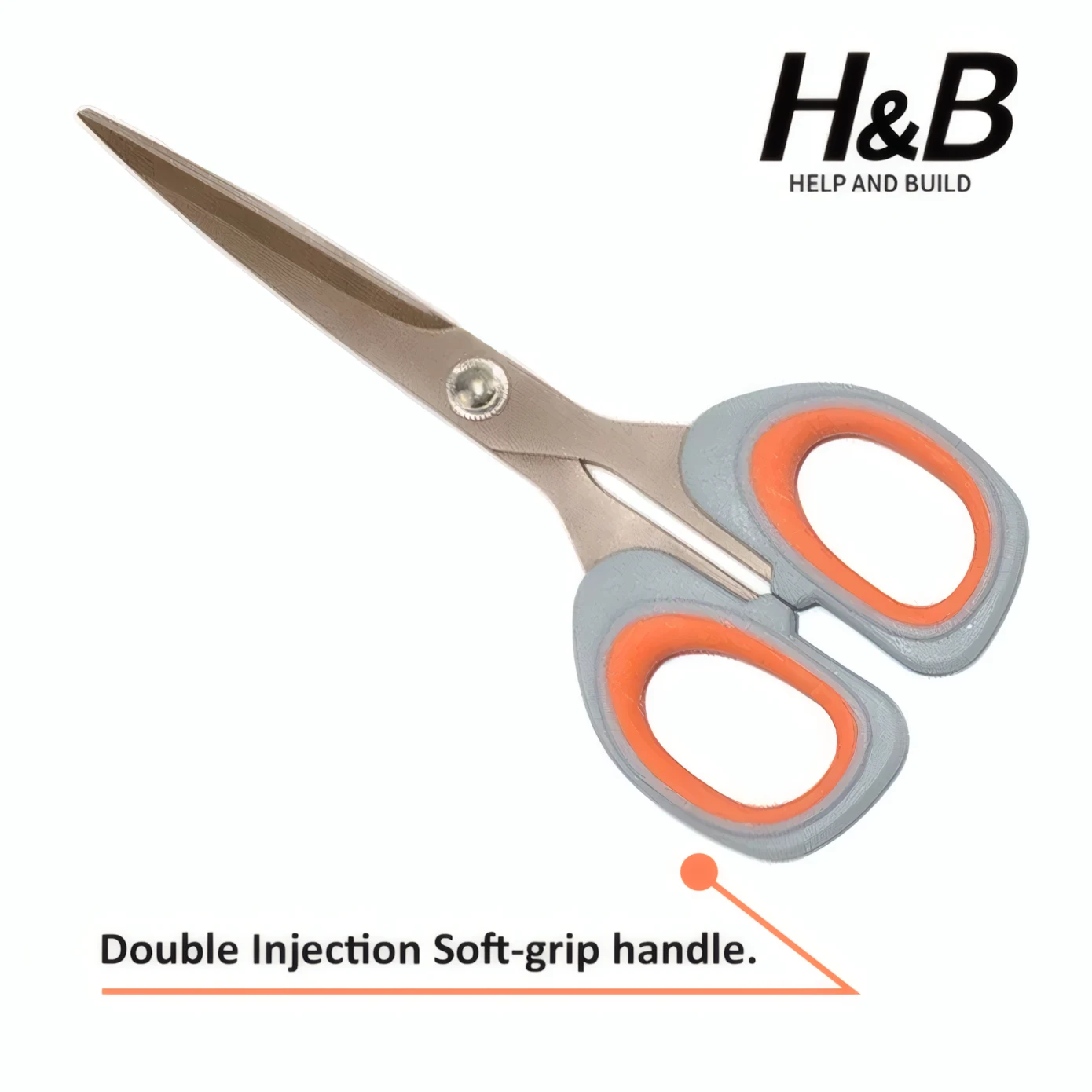
Double-injection molding (also known as two-shot molding) means the scissor handle is made by combining two different plastic materials in a single production cycle.
In this process, we combine a rigid plastic with a soft elastomer to create the ultimate user experience:
- The Inner Ring (Soft TPR): The area inside the handle loops, where the user's fingers directly make contact, is molded with soft TPR plastic. This soft inner cushion absorbs pressure, prevents finger fatigue, and makes heavy cutting comfortable.
- The Outer Frame (Hard PP): The outside body of the handle is molded with hard PP plastic. This rigid outer shell provides structural strength, ensures the handle does not bend under high force, and makes the scissors highly durable and drop-resistant.
Single-Material TPR Handles
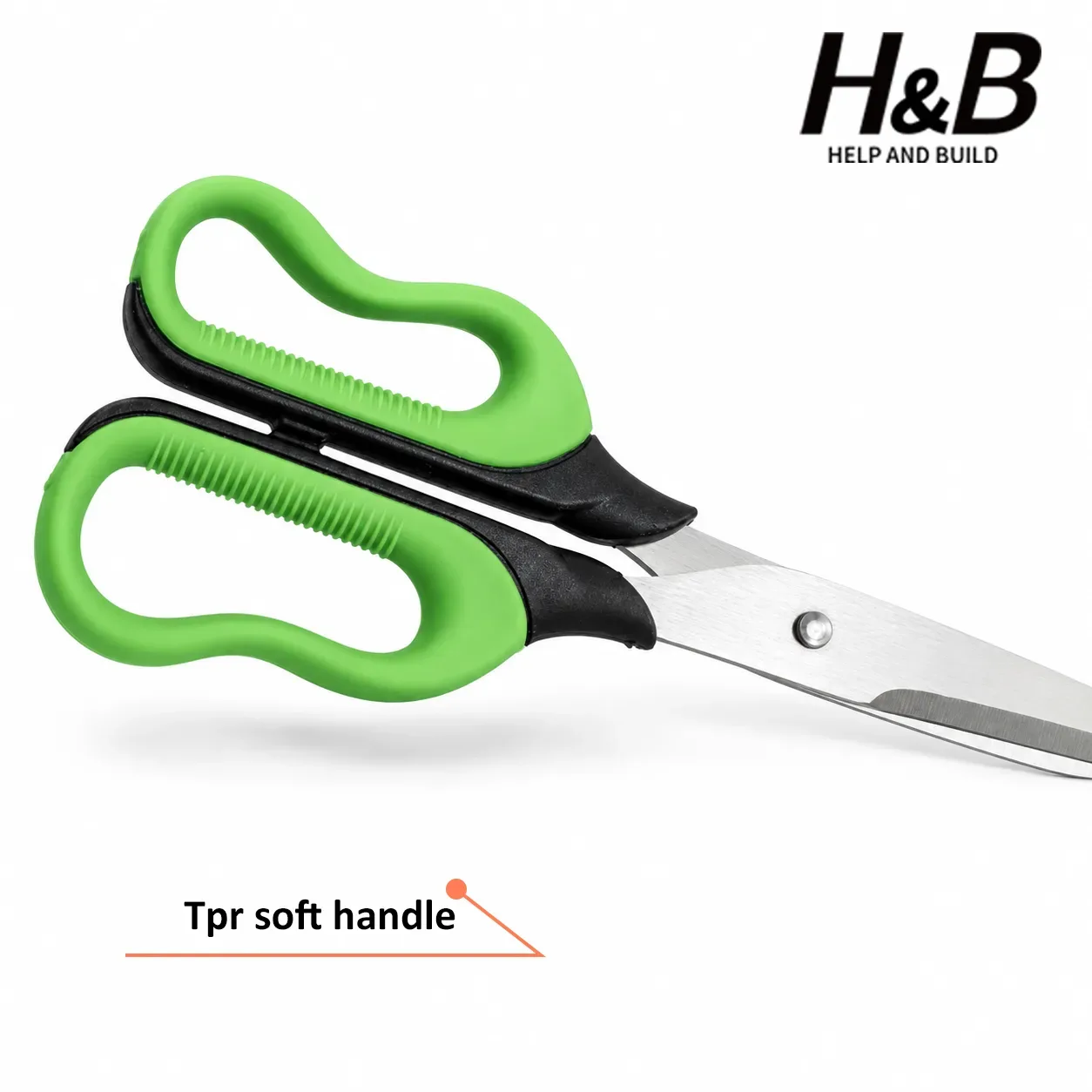
TPR can also be used alone to manufacture certain handles. This is common in ergonomic school or stationery scissors. Single-material soft handles bring lightness to the scissors, and their flexible, deformable nature makes them comfortable and fun for younger users.
4. Nylon in Premium Scissors
Nylon handles are stronger, more abrasion-resistant, more heat-resistant, and offer better flame-retardant properties than both ABS and PP. However, Nylon is more expensive and harder to process.
For premium tailor shears and professional dressmaking scissors, we often use Nylon to ensure maximum durability under heavy, repetitive daily use. These professional items represent a much higher level of craftsmanship and performance compared to regular household scissors.
5. Other Scissor Handle Materials
Apart from plastic-handled scissors, there are other traditional material configurations:
- Full Steel Scissors: Both the blade and the handle are forged from a single piece of steel, such as stainless steel or carbon steel. These are incredibly durable and favored by professionals.
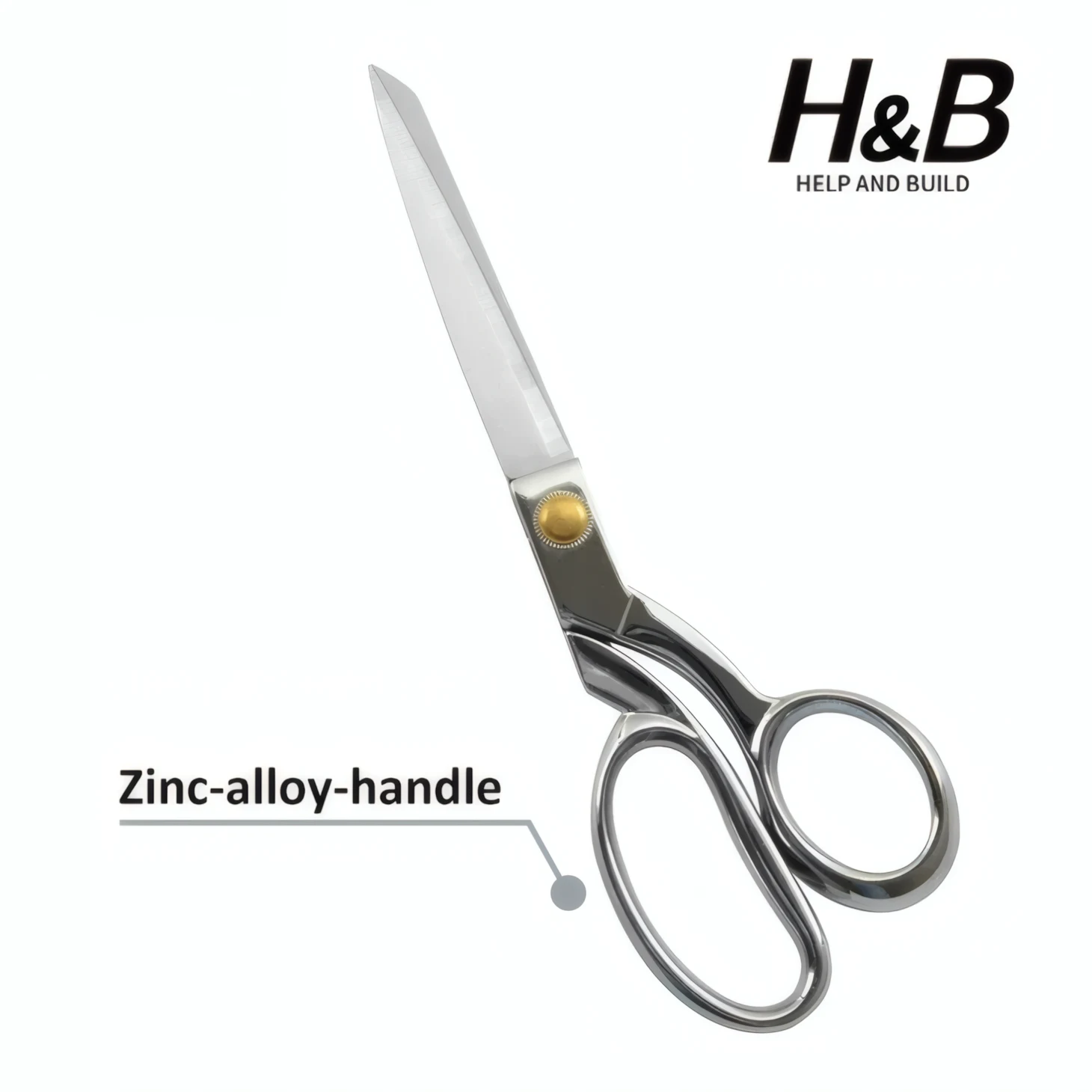
- Zinc-Alloy Handles: Some heavy-duty shears feature steel blades combined with handles pressure-die-cast from zinc-alloy. These provide a comfortable weight, classic metallic appearance, and immense strength.
Work With Us
Choosing the right handle material depends on your target price range, expected durability, product appearance, and end-user comfort. H&B Houseware can help you compare options and match the material structure to your market.
To discuss scissor materials, handle structures, and OEM/ODM development, contact us at [email protected].